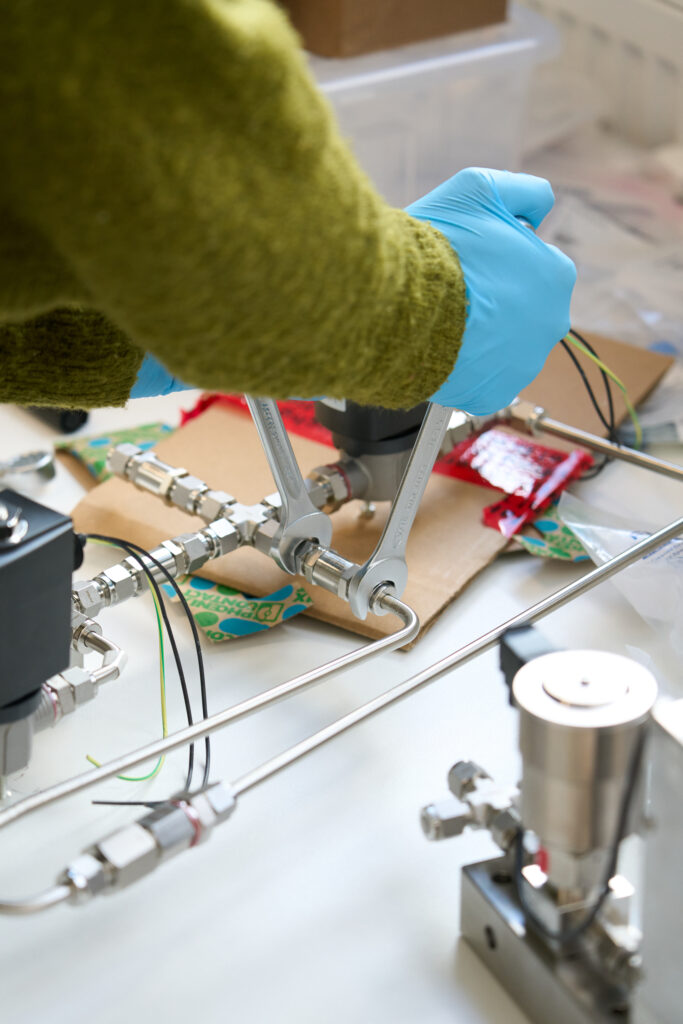
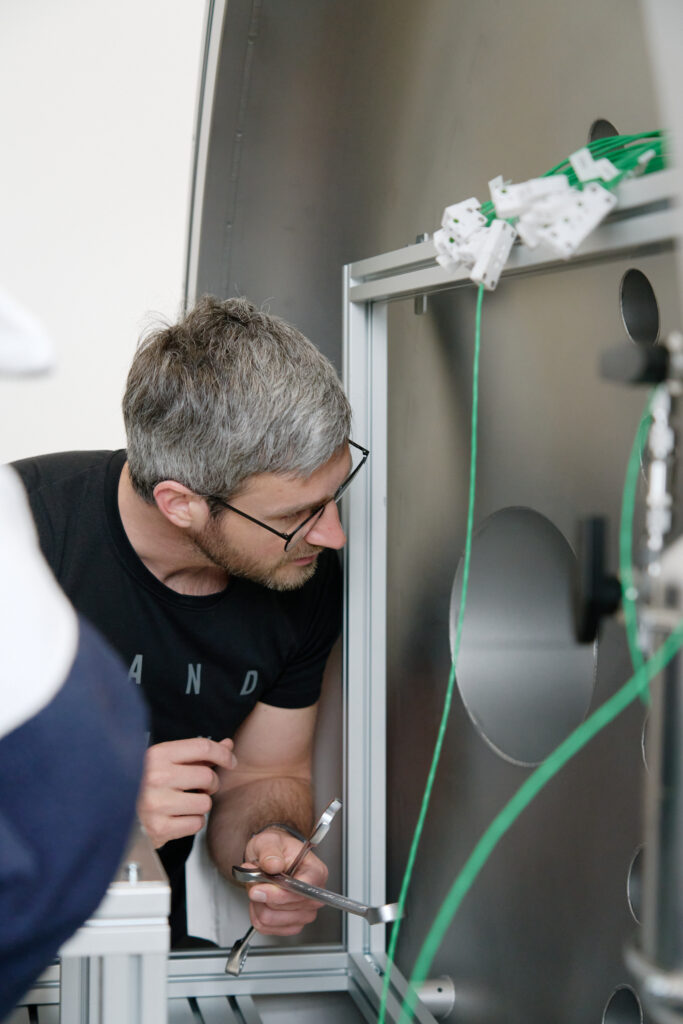
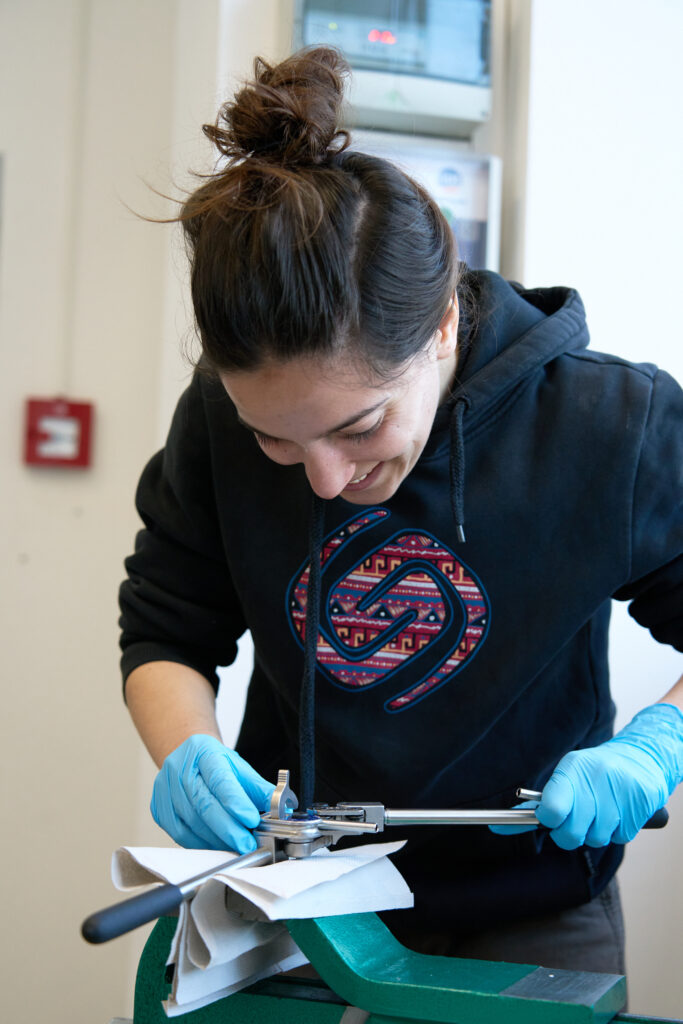
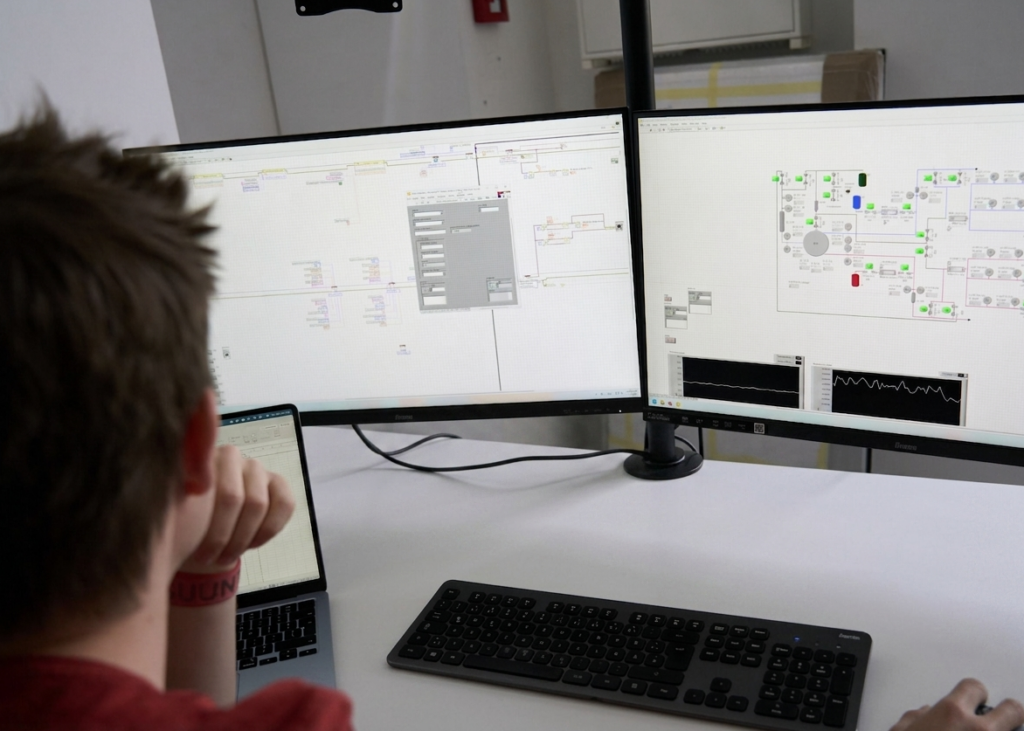
A major infrastructure milestone is underway at the Technical University of Munich (TUM): the assembly of EVE, the Ice2Thrust project’s dedicated testbench for coupled electrolyser and thruster testing under vacuum conditions, at TUM’s facility in Ottobrunn.
For the first time, EVE will allow the team to bring together prototypes of the Water Electrolysis Propulsion (WEP) system’s key components — the electrolyser, the hot-gas thruster, and the cold-gas thruster — and test them in a simulated space environment. Operating under vacuum conditions is essential to validate performance in a way that is truly representative of how these systems will behave in orbit.
This is a pivotal step in the Ice2Thrust (S4I2T) roadmap. Throughout the project, TUM and consortium partners have been developing and individually validating each building block of the propulsion system: the electrolyser that splits water into hydrogen and oxygen, the hot-gas thruster that combusts these gases to generate high-performance thrust (targeting an Isp ≥ 370s), and the cold-gas thruster for attitude and proximity control. EVE is the infrastructure that brings them all together.
The completion of EVE’s assembly will pave the way for the project’s first coupled system test — a landmark demonstration of the complete Ice2Thrust propulsion chain operating under representative space conditions. This will be a significant step toward the ultimate project goal: a fully self-sustaining, Earth-independent space mobility infrastructure powered by solar energy and water as propellant.
The team has been documenting the assembly process, and we’re pleased to share a glimpse into the work happening on the ground. Watch this space for updates as we move closer to first test firings.